Thursday, October 24, 2019
Manaiakalani Wananga 2019 - Presenting my Inquiry
Today I presented a summary of my MIT Inquiry into literature circles, video creation and a shared blog.
Above is my presentation with speaker notes on alternate slides.
There were several key takeaways from this day:
- Change the subject of reading into the practice of reading across the curriculum
- There was a positive response to the data and findings from the inquiry (slides 19, 21, 24)
- In 2020 there will be a focus on reading. Much of my inquiry aligns with the Wolf-Fisher suggestions for lifting reading achievement - reading authentic texts, extended reading of a single text, extended discussion and conferencing, reading strategies, critical thinking, co-authorship and agency.
Next steps:
- Get some comparative data from within the school.
- Continue to develop the teacher section of the LIT CIR CON blog
- How do I implement the programme for 2020? New studio, new team, new students

Monday, October 14, 2019
Learning in the Fast Lane - Student Work Sessions
Title of Book
Learning in the Fast Lane
Author
Suzy Pepper Rollins
Synopsis
In this chapter, Rollins discusses how low-level work for struggling students is not engaging or useful. It covers a number of strategies that encourage collaboration and accountability for students with their peers. There is a strong correlation between the strategies mentioned and how I have been running my Literacy Circle Conversation reading programme.
How will it help me?
Use the metacognition strategies in reading - VIP, Sticky notes etc
Discussion
Learning in the Fast Lane
Author
Suzy Pepper Rollins
Synopsis
In this chapter, Rollins discusses how low-level work for struggling students is not engaging or useful. It covers a number of strategies that encourage collaboration and accountability for students with their peers. There is a strong correlation between the strategies mentioned and how I have been running my Literacy Circle Conversation reading programme.
How will it help me?
Use the metacognition strategies in reading - VIP, Sticky notes etc
Discussion
Monday, September 16, 2019
Learning in the Fast Lane - Chapter 5 - Vocabulary Development
Here is our discussion on Chapter 5 of Learning in the Fast Lane by Suzy Pepper Rollins.
Title of Book
Learning in the Fast Lane - Chapter 5 - Vocabulary Development
Author
Suzy Pepper Rollins
Synopsis
Many students arrive at school with up 70% less vocabulary than their peers. Here are some strategies for developing student strategies and exposing students to new words 6 times. These should be visual, interactive and collaborative.
How will it help me? How has it helped me?
I have used several of these strategies with my Level 1b writers. They have developed an understanding of key science vocabulary (e.g. force, energy, friction, vibration).
I need to include using the strategies for incidental vocabulary.
Title of Book
Learning in the Fast Lane - Chapter 5 - Vocabulary Development
Author
Suzy Pepper Rollins
Synopsis
Many students arrive at school with up 70% less vocabulary than their peers. Here are some strategies for developing student strategies and exposing students to new words 6 times. These should be visual, interactive and collaborative.
How will it help me? How has it helped me?
I have used several of these strategies with my Level 1b writers. They have developed an understanding of key science vocabulary (e.g. force, energy, friction, vibration).
I need to include using the strategies for incidental vocabulary.
Tuesday, September 10, 2019
Literacy Circle Conversation Student Resources
After our last KPMG day (The Dragon's Den), I decided to create resources to help students understand their roles better. These I have linked to the updated script, which is now a Google Presentation.
This Presentation has become the end result of several scripts, reading reflections and storyboards my class has used throughout the year. My students found previous reflections and scripts time-consuming and without purpose. Having the script as a presentation provides the students' another opportunity to collaboratively process their thinking.
Below are the accompanying resources for LIT CIR CON. Each relates to the roles as described by Lauren Coccia in her paper Literature Circles and Their Improvement of
Comprehension.
I would like to point out that these are the roles being used by my Year 6 students as I believe they align with the key comprehension strategies students need to interact with texts in Year 6 and beyond. In other cooperative literacy activities similar to literacy circles, such as reciprocal reading, there are similar roles. However, in reciprocal reading, the text tends to be attacked in smaller chunks page-by-page. In literacy circles the text is approached as a whole by each student.
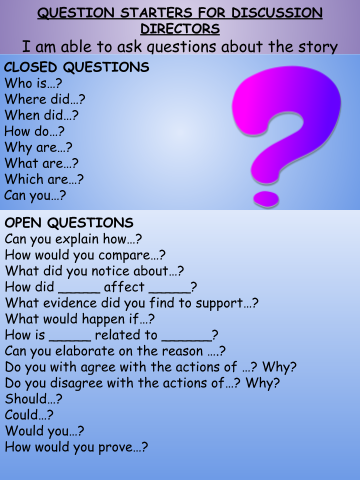

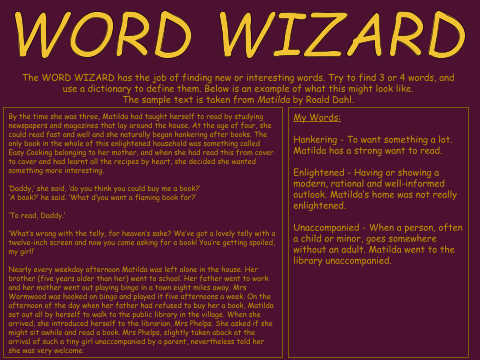
Please feel free to make copies and changes as you see fit.
This Presentation has become the end result of several scripts, reading reflections and storyboards my class has used throughout the year. My students found previous reflections and scripts time-consuming and without purpose. Having the script as a presentation provides the students' another opportunity to collaboratively process their thinking.
Below are the accompanying resources for LIT CIR CON. Each relates to the roles as described by Lauren Coccia in her paper Literature Circles and Their Improvement of
Comprehension.
I would like to point out that these are the roles being used by my Year 6 students as I believe they align with the key comprehension strategies students need to interact with texts in Year 6 and beyond. In other cooperative literacy activities similar to literacy circles, such as reciprocal reading, there are similar roles. However, in reciprocal reading, the text tends to be attacked in smaller chunks page-by-page. In literacy circles the text is approached as a whole by each student.
Please feel free to make copies and changes as you see fit.
Tuesday, September 3, 2019
Understanding Behaviour: Responding Safely
Here are my notes on today's staff meeting on understanding and responding to the high anxiety behaviour we experience at Rawhiti School.
Much of what was discussed aligns with work on Restorative Justice and the book Lost at School. One consideration is how Ross Greene's book sets out to focus on a single missing social skill a child may have. In our teaching environment, we are trying to meet the needs of several children who are missing essential social skills, while trying to keep everyone safe and then teaching them at the same time. No small task.
Tomorrow I will make an effort to great each student I work with during writing by saying their name and giving them a high five/ fist bump. My current writing group is the most challenging I work with. There are many behavioural needs as well as strong learning needs across the board. This is an initial See Me strategy.
Much of what was discussed aligns with work on Restorative Justice and the book Lost at School. One consideration is how Ross Greene's book sets out to focus on a single missing social skill a child may have. In our teaching environment, we are trying to meet the needs of several children who are missing essential social skills, while trying to keep everyone safe and then teaching them at the same time. No small task.
Tomorrow I will make an effort to great each student I work with during writing by saying their name and giving them a high five/ fist bump. My current writing group is the most challenging I work with. There are many behavioural needs as well as strong learning needs across the board. This is an initial See Me strategy.
Monday, August 19, 2019
Learning in the Fast Lane Chapter 4 - Formative Assessment
Here is the recording of our team discussion on Suzy-Pepper Rollins Learning in the Fast Lane on acceleration student progress.
I thought I would make Google Slides with the strategies for each section as my notes from now on. These can go on our team site, but feel free to use them. I will try to add photos of examples as they happen.
I thought I would make Google Slides with the strategies for each section as my notes from now on. These can go on our team site, but feel free to use them. I will try to add photos of examples as they happen.
Saturday, August 17, 2019
KPMG Day 3 - The Dragon's Den
On Monday the 12th of August we meet again at KPMG. Our task for this session was to sell our idea and tool to Dorothy, Anne and Jenny, as well as each other. Anne prefaced us with these questions:
It was great to see all my MIT colleague's tools. In particular, I am eager to use Nicola's, Joanna's and Amber's tools with my students.
As the day went on I started to draw some conclusions about my next steps. They are:
- What is the tool/concept/idea?
- How have you tested it? What did the testers think?
- Why would we want to use it?
- What is it able to do?
- How has it evolved and what changes have you had to make? How and why?
- What do the learners think of it?
- Is it making a difference or will it make a difference? How do you know?
- What has driven you in the development?
- How is it different from other similar tools?
- What does your team (us) think?
Here my summary of where my inquiry and tool currently sit.
It was great to see all my MIT colleague's tools. In particular, I am eager to use Nicola's, Joanna's and Amber's tools with my students.
As the day went on I started to draw some conclusions about my next steps. They are:
- Develop a supporting Google Site for teacher information and resources (Dorothy suggested I use an additional page on the LITCRICON blog)
- Develop scaffolding resources for all the roles in a literature circle - currently, I have a question poster for the Discussion Director role
- Get some of my Rāwhiti School colleagues to test it
- Set up labels on the blog and video submission Google Form for texts or theme
From Dorothy's notes, we also discussed how important it is to front-load students with behaviour expectations. Students need to apply the Key Competencies and "soft skills" to be successful with the LITCIRCON blog and literature circles.
Bring on October's Manaiakalani Wananga!
Subscribe to:
Posts (Atom)
-
 The Hui has been challenging and awesome. Lovely location, nice people, fierce card playing! Session 1 - Here we learnt what is Manaia...
 -
This year Rawhiti School will be working with the DMIC programme to accelerate our learners in mathematics. These are my notes for the fir...
-
This is a quick update from my previous blog. Upon returning to school I meet with my students. We discussed specific problems they have w...